We’re not downplaying the impact a herniated disc can have on your life. It can turn everyday activities into unexpected challenges. Sitting at a desk, getting out of bed, or taking a short walk may suddenly trigger pain that travels through the back, buttocks, or legs.
Researchers estimate that more than 3 million people in the U.S. struggle with herniated discs. However, like most medical conditions, herniated discs don’t have a one-size-fits-all solution.
That’s why our multispecialty team at Coastal Spine, serving our New Jersey communities from five patient-first locations, tailors treatments to meet your specific needs.
When you have a herniated disc, the right treatment approach depends on your symptoms, the disc location, and how your body responds to treatment.
What happens when a disc herniates?
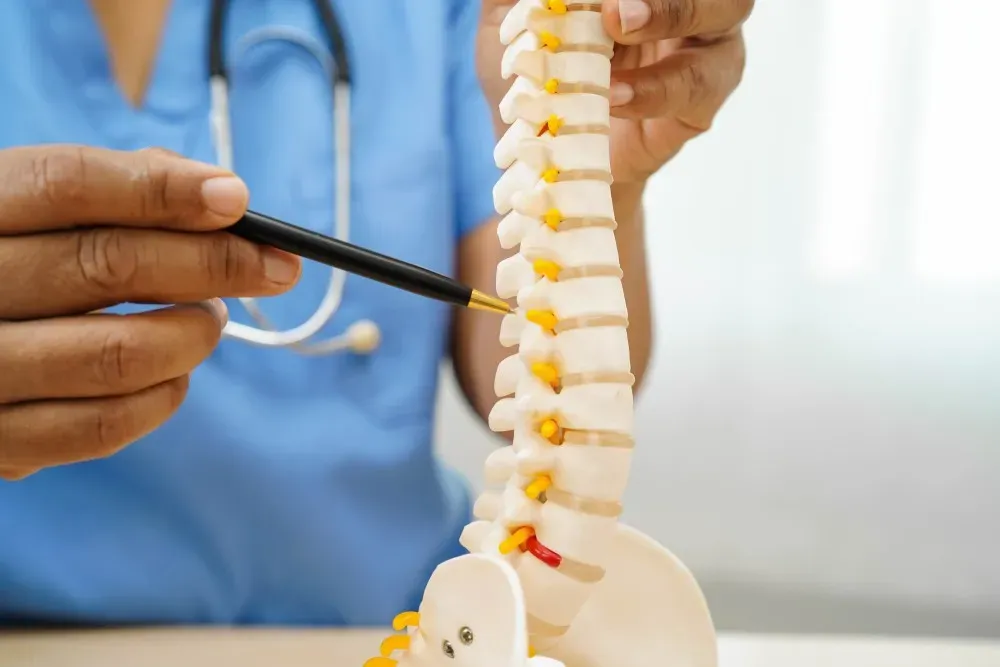
The spine contains small, cushion-like discs between its vertebrae. Each disc helps absorb impact and lets your back bend and move comfortably. A herniated disc develops when the soft inner material pushes through a weakened or damaged area of the disc's outer layer.
You may not realize you have a herniated disc since they sometimes cause little to no discomfort. However, in other cases, the displaced material can irritate nearby spinal nerves, leading to pain, numbness, tingling, or muscle weakness.
When a lower back nerve is affected, symptoms may radiate down one leg, a condition commonly associated with sciatica.
Although these symptoms can be frustrating, a herniated disc doesn’t automatically mean surgery is necessary.
Why conservative treatment is often the first step
For many patients, herniated disc symptoms gradually improve over several weeks to a few months. The body can reduce inflammation around the affected nerve, and the herniated material may shrink over time.
Unless you have urgent warning signs or significant neurological problems, we usually recommend starting with conservative care to relieve pain, improve mobility, and help you resume normal activities without the risks and recovery time associated with surgery.
Nonsurgical treatments for herniated discs
Your Coastal Spine provider can consider several treatment options, depending on your symptom severity and how they affect daily life.
Physical therapy
Physical therapy includes exercises that improve flexibility, strengthen supporting muscles, and build better movement habits. Your program may include gentle stretching, core strengthening, and guidance on sitting, lifting, and standing with less strain on your back.
Medication
Nonsteroidal anti-inflammatory drugs (NSAIDs), when appropriate, may help reduce pain and inflammation. We may consider other medications for specific symptoms. Your provider can help determine which options are safe based on your medical history and other medications.
Activity modification
Prolonged bed rest is generally discouraged. Instead, short walks and gentle movement, as tolerated, can help maintain mobility. Additionally, temporarily avoid heavy lifting, repeated bending, or movements that worsen symptoms.
Pain relief
Our Coastal Spine pain management team focuses on relieving discomfort that interferes with your daily routine. For some patients, an epidural steroid injection near the irritated spinal nerve can reduce inflammation and provide temporary pain relief.
For more severe pain, we may recommend advanced therapy such as radiofrequency ablation. This in-office treatment uses radiofrequency energy to disrupt pain signals traveling from irritated nerves.
Relieving pain can make it easier to participate in physical therapy and rehab activities aimed at restoring pain-free mobility.
When should you consider surgery?
Nonsurgical care doesn’t work for everyone. If severe pain continues despite appropriate treatment, or symptoms significantly interfere with walking, sleeping, or everyday activities, our team may consider a surgical procedure.
We may also recommend surgery when a herniated disc causes progressive muscle weakness or other significant neurological problems. In some cases, removing the disc material pressing on a nerve can relieve symptoms.
Our Coastal Spine surgeons are skilled in advanced surgical procedures that address underlying issues with minimal disruption.
Seek emergency medical attention if you develop new difficulty urinating, loss of bowel or bladder control, numbness around the groin or saddle area, or rapidly worsening leg weakness. These symptoms can indicate serious nerve compression that requires urgent evaluation.
Find the right treatment for your back today
A herniated disc diagnosis doesn’t automatically put you on the path to surgery. Schedule an evaluation at Coastal Spine today for an individualized treatment plan that meets your needs.
